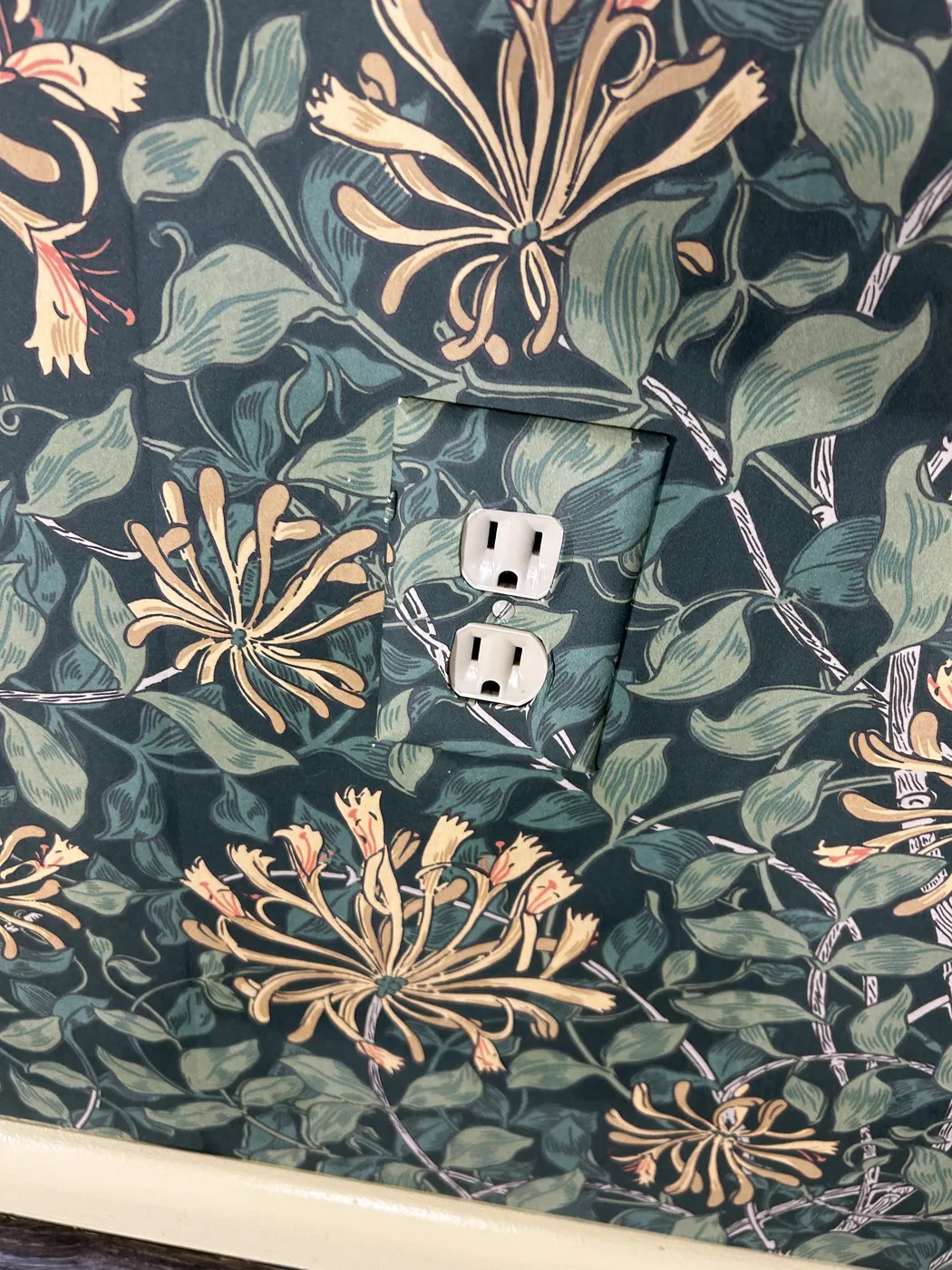
Two numbers on the roll label decide how much paper you need and how hard the job is: the pattern repeat and the match type.
We reply within 30 minutes: call, text or WhatsApp
The repeat is the vertical distance before the design starts over; the match tells you how each strip lines up with the next. Straight match repeats at the same height on every strip, half drop shifts every other strip down by half the repeat, and random match lines up anywhere. The bigger the repeat, the more paper is cut off each strip to line the pattern up, so large repeats and half drops need more rolls.
Written by our installers from jobs we do every week. Prefer not to do it yourself? Send photos and we quote the job, usually within hours.
Given in inches or centimeters, for example 21 in (53 cm). Each strip has to be cut so the pattern lines up, so you may lose up to one full repeat per strip.
The design sits at the same height on every strip, like a grid. Easier to plan, less waste than half drop.
Every other strip is shifted down by half a repeat, so motifs zigzag across the wall. Common on florals and large designs; uses more paper.
Stripes, textures and grasscloth have no pattern to line up. Least waste, but strips are often reversed to even out color.
Rolls printed in different runs can differ slightly in color. Buy all rolls from one batch and keep the label.
US and European rolls differ in width and length, and some papers are sold only as double rolls. Count usable strips, not square feet.
| Match | What it looks like | Waste and rolls |
|---|---|---|
| Random / free | Stripes, textures, grasscloth, plains | Least waste |
| Straight | Motifs line up across at the same height | Moderate; grows with the repeat |
| Half drop | Motifs zigzag diagonally across the wall | More waste; order extra |
| Large repeat (over 24 in) | Big florals, scenic designs | Often only 2 to 3 strips per roll |
| Murals and panels | One picture over set panels | Ordered by wall size, not rolls |
Count your rolls with the wallpaper calculator. See also how to hang wallpaper and how to choose a wallpaper installer.
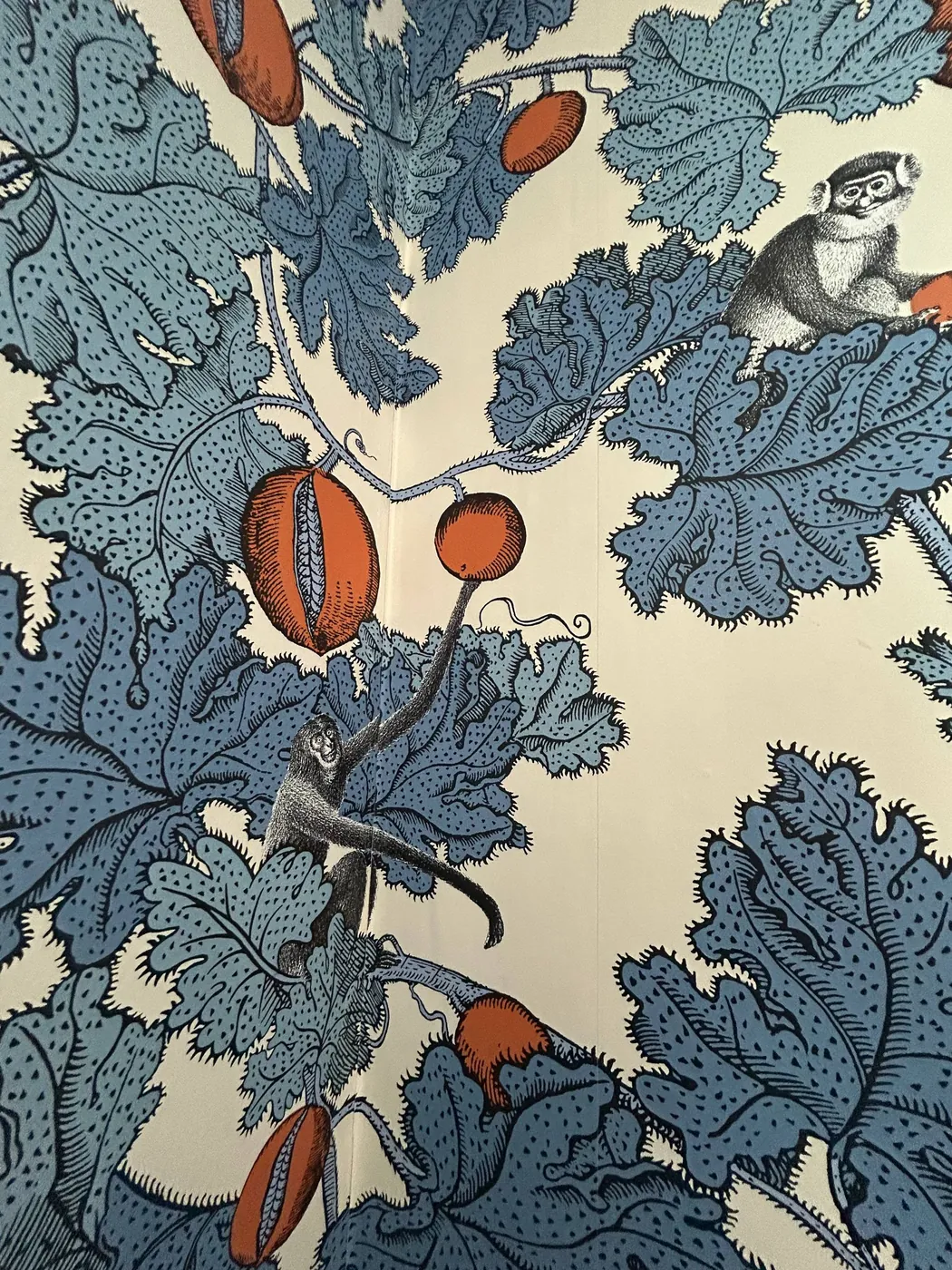
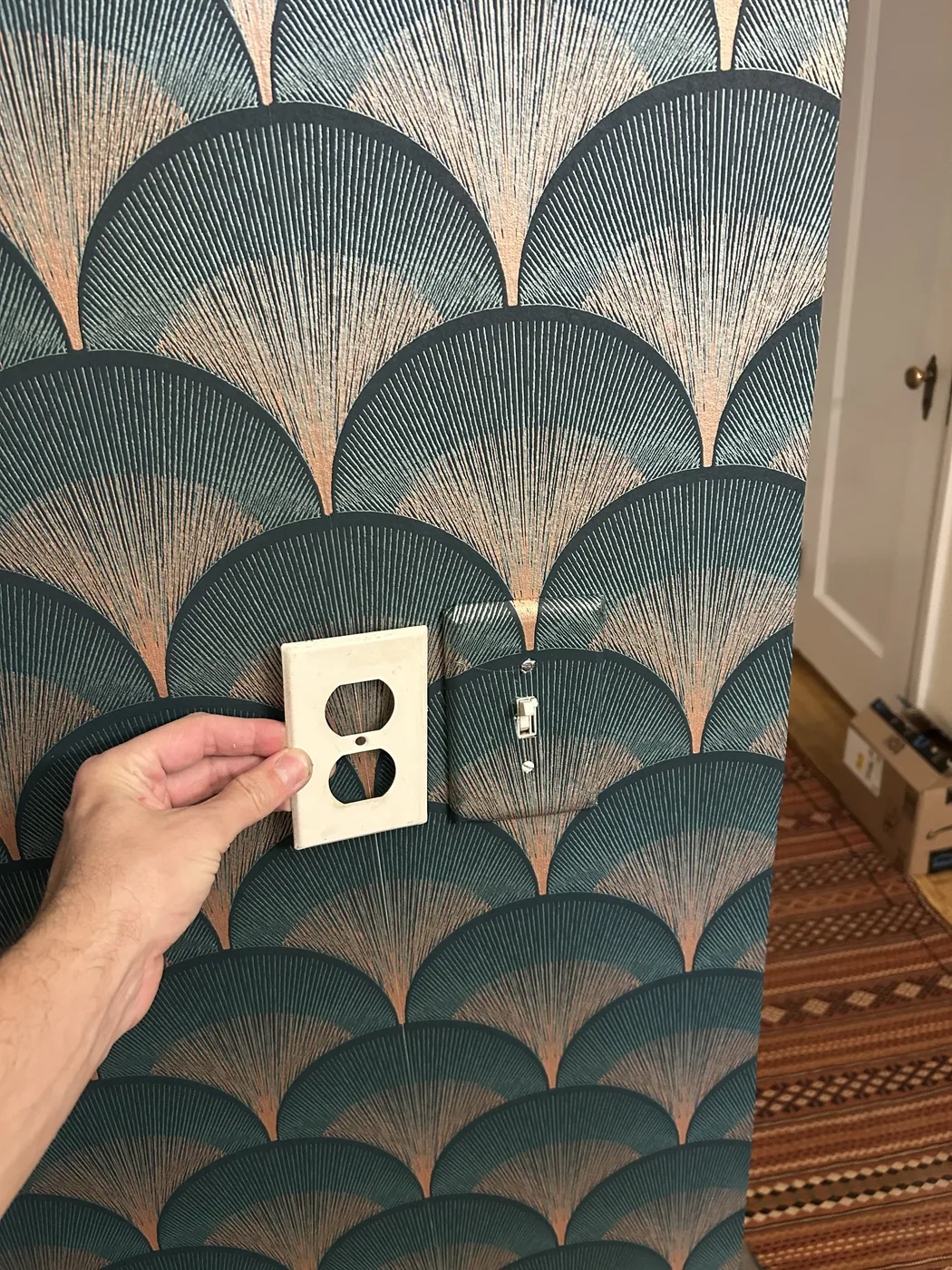
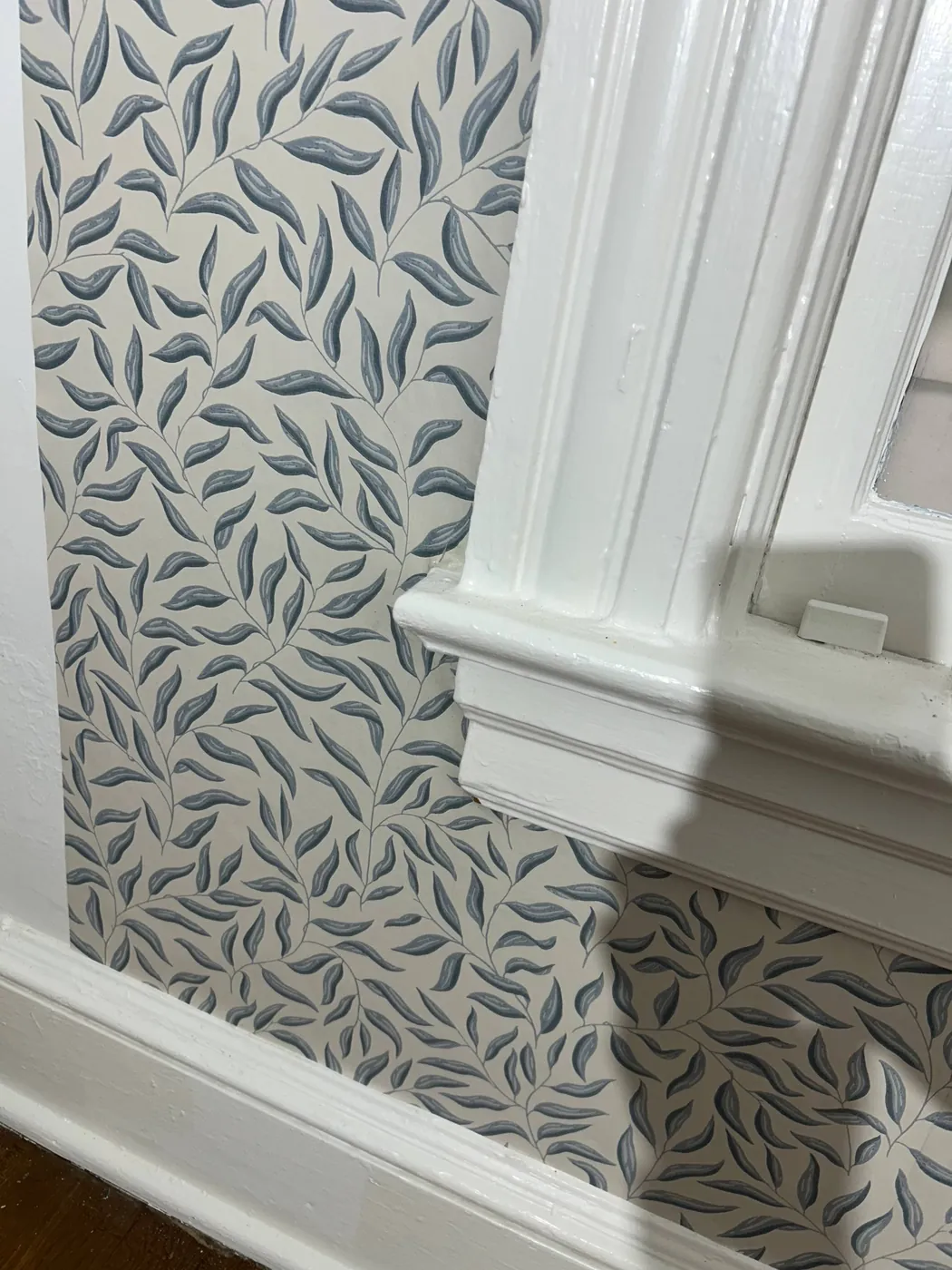
Selected projects from our portfolio. See all projects.
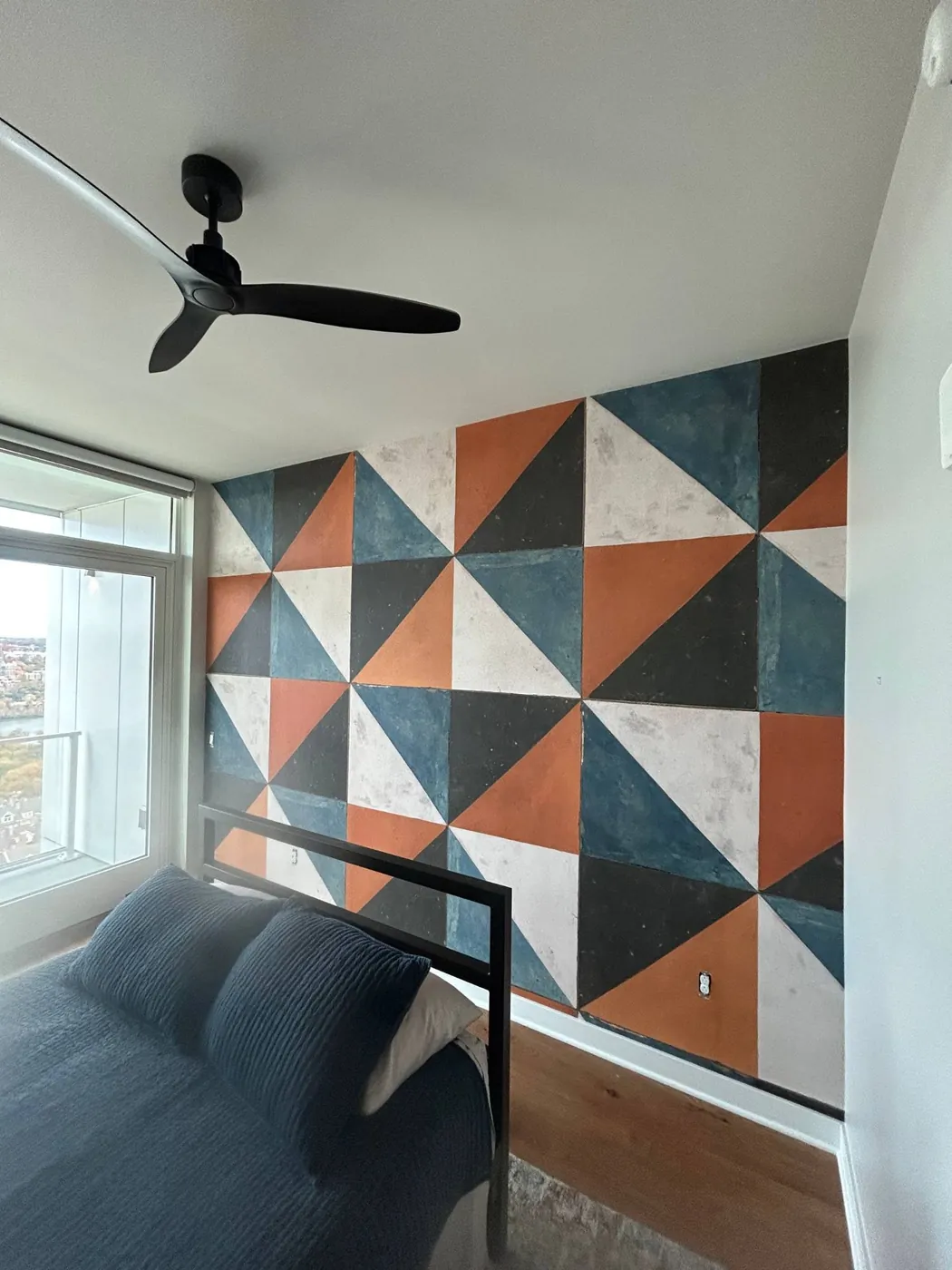
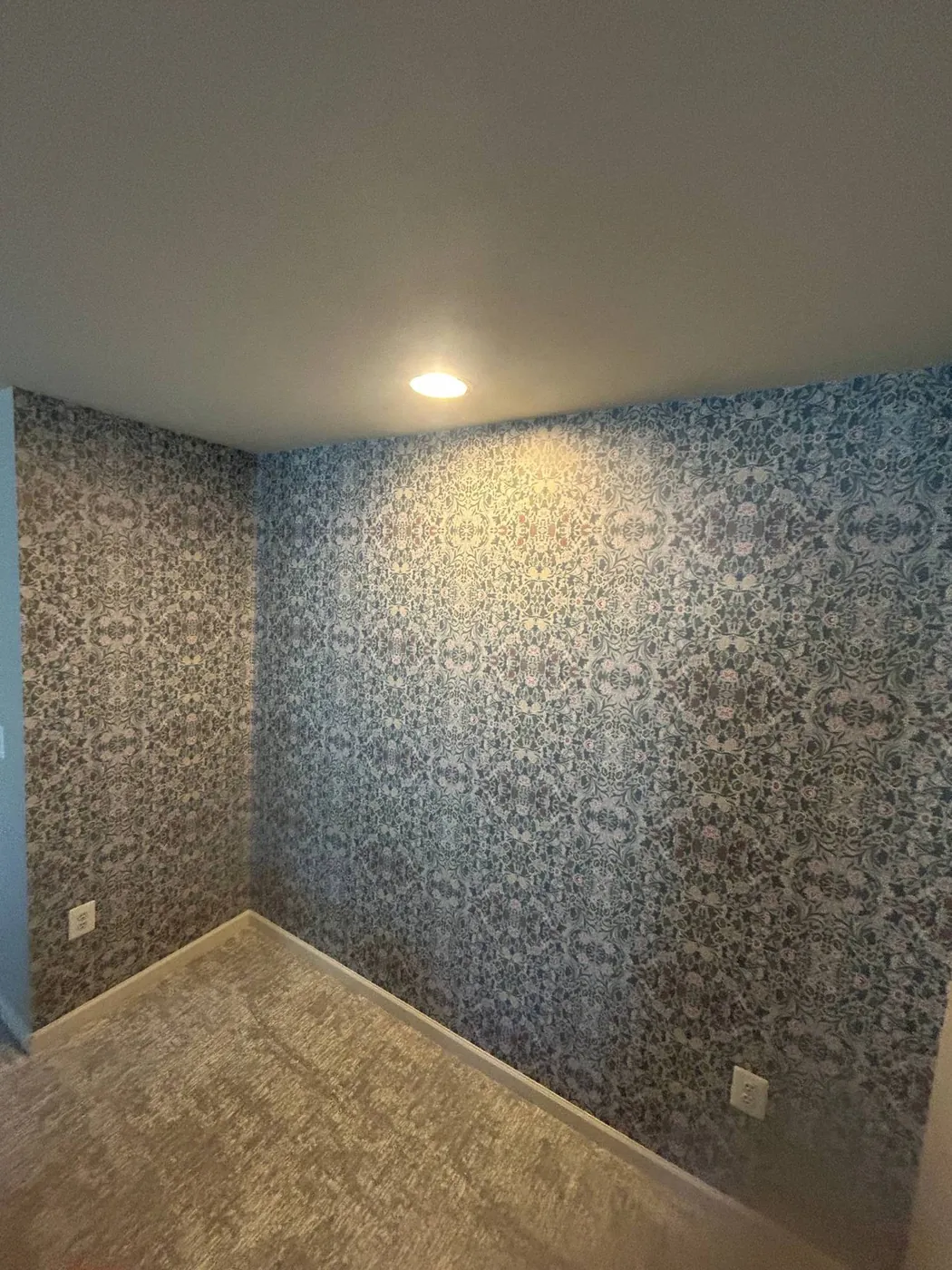
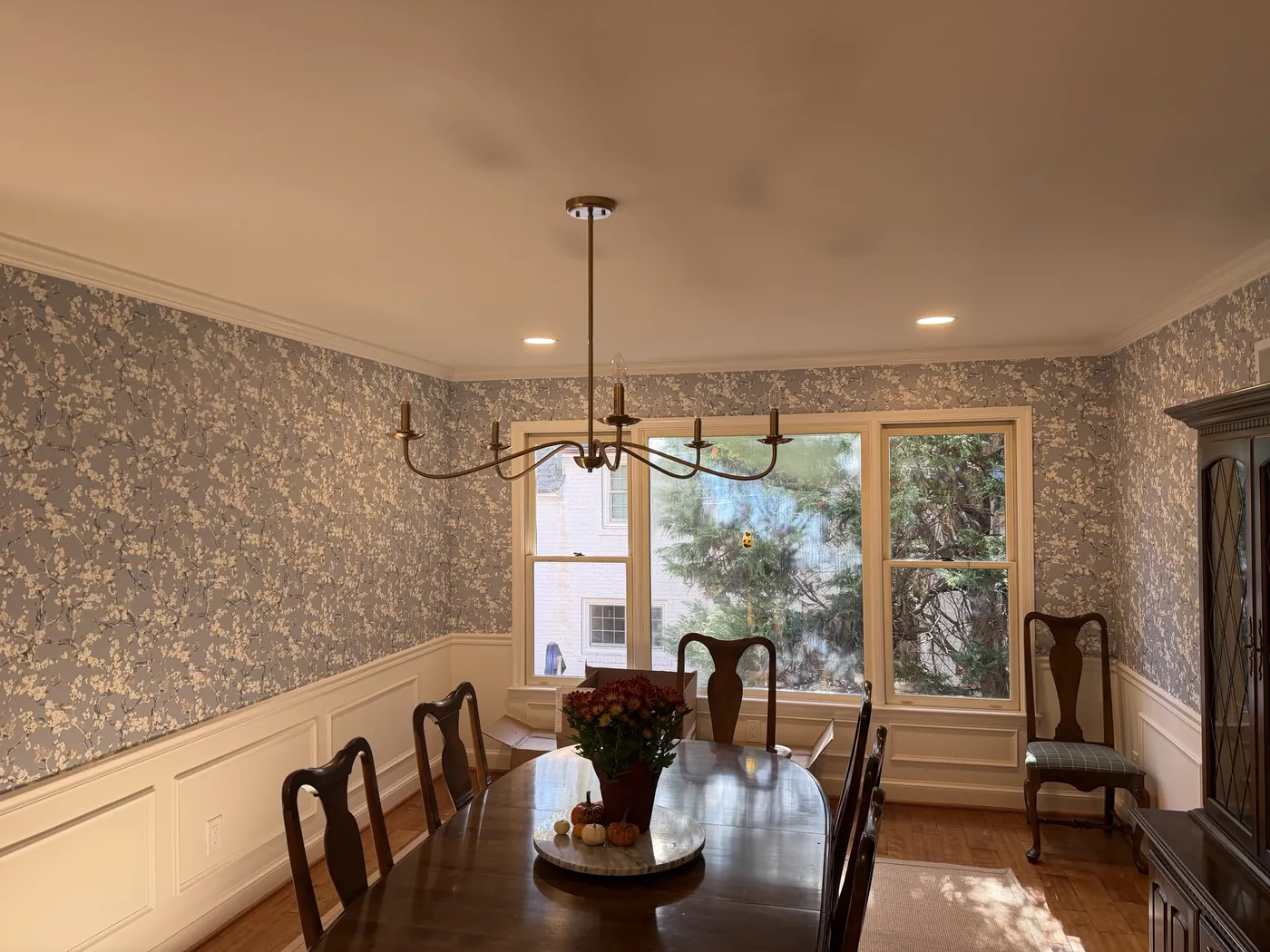
New York City, Long Island, Westchester County and northern New Jersey: Manhattan, Brooklyn, Long Island, The Hamptons, Westchester, Hoboken, Montclair.
It is the vertical distance in which the design repeats. A 21 inch repeat means the same motif appears every 21 inches down the strip.
Every other strip is hung half a repeat lower, so the design steps diagonally across the wall. It uses more paper than a straight match.
Add one repeat to the height of each strip when you count how many strips fit in a roll. Our wallpaper calculator does this for you, plus about 10 percent for repairs.
Usually with a full motif at the ceiling line, or centered on the focal wall. The last mismatched seam is placed where it is least visible.
Corners are rarely plumb, so installers re-hang the next wall to a new plumb line. A small mismatch in an inside corner is normal; at eye level on a flat wall it is not.
Ready to start your project? Call, text or WhatsApp photos for a fast, free estimate. We reply within 30 minutes.
 ProKir