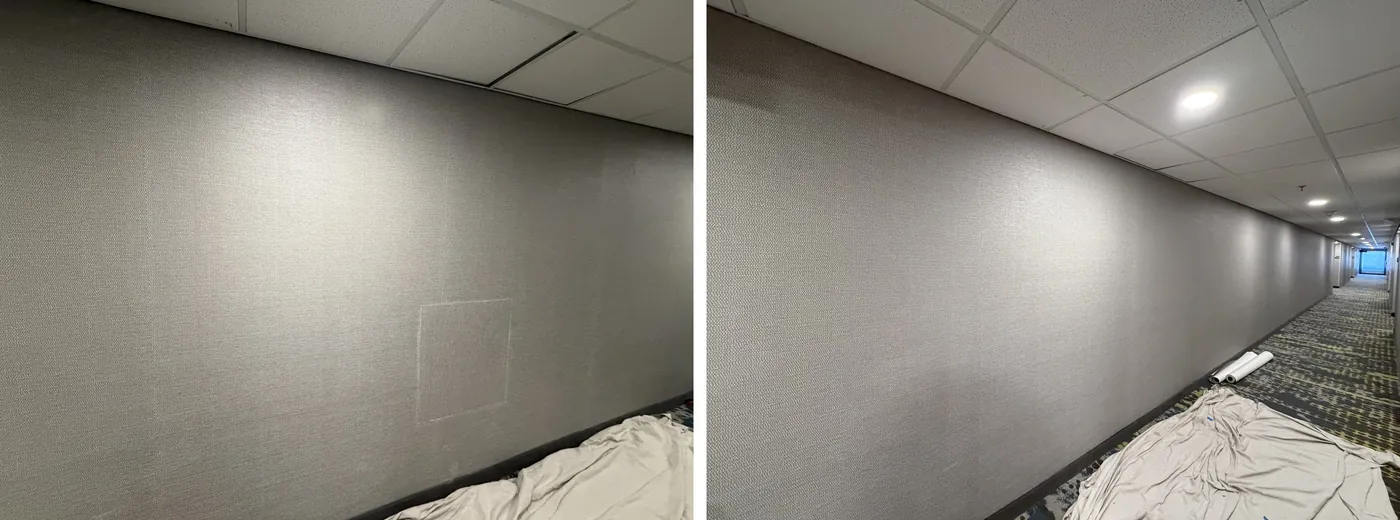
A dent from a couch or a tear from moving day rarely means redoing the wall. Two questions decide the fix: do you have matching paper, and is the wall behind it damaged?
We reply within 30 minutes: call, text or WhatsApp
Cut a matching piece over the damage and slice through both layers at once. Tape a piece of the same wallpaper over the damaged spot with the pattern lined up exactly, cut through the new piece and the old paper together with a fresh blade, peel away the damaged section and paste the new piece into the opening. Because both layers were cut together, the patch fits edge to edge. If the drywall behind it is dented, repair and prime the wall first, or the dent shows through the new paper.
Written by our installers from jobs we do every week. Prefer not to do it yourself? Send photos and we quote the job, usually within hours.
Hold a flashlight flat against the wall and shine it across the damage. A dent in the drywall throws a soft shadow; run your fingers over it too. Torn paper on a flat wall is a simple patch. A dented wall needs drywall repair first.
Look for leftover rolls first: closets, basements, garages. In apartment buildings, ask the super or management; they often keep spares from the original job.
Take a piece from a spot nobody sees: inside a closet, behind a fridge or a tall bookcase. Cover that spot with something similar or leave it, it is hidden anyway.
If the pattern is still sold, order a roll and compare the batch (lot) number with your old label if you have it. A different batch can be a shade off, which shows on a patch right in the middle of a wall.
A dull blade tears paper instead of cutting it, and a ragged edge is what gives a patch away. Snap off or change the blade before each cut.
Busy patterns hide patches best. Plain papers and grasscloth show almost any patch; there, replacing the whole strip from seam to seam usually looks better.
| Wallpaper | Patch result | Our approach |
|---|---|---|
| Busy or large pattern | Patch practically disappears | Double cut along the lines of the design, not a square |
| Textured vinyl | Good if the cut follows the texture | Double cut, vinyl-to-vinyl adhesive where the patch overlaps |
| Paper or non-woven, small pattern | Good with a careful pattern match | Double cut, standard paste, roll the edges |
| Plain or solid color | Edges tend to show | Replace the whole strip if the patch is in plain sight |
| Grasscloth and natural fibers | Color varies strip to strip | Replace the full strip, seam to seam |
Need more than a patch? See our wallpaper repair service for seams, bubbles and water damage, how to fix lifting wallpaper seams, the pricing guide, vinyl wallpaper installation and how to clean wallpaper.
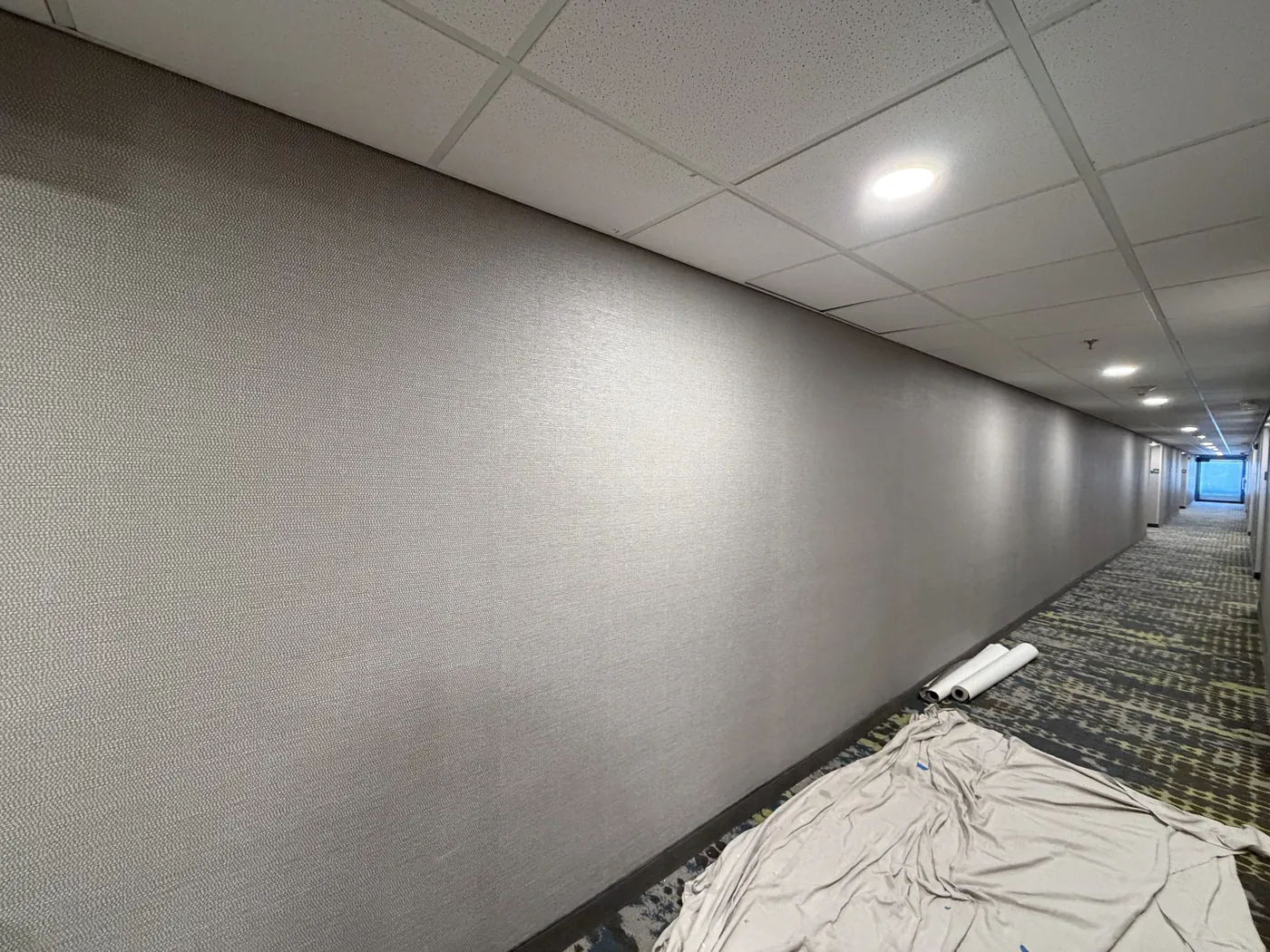
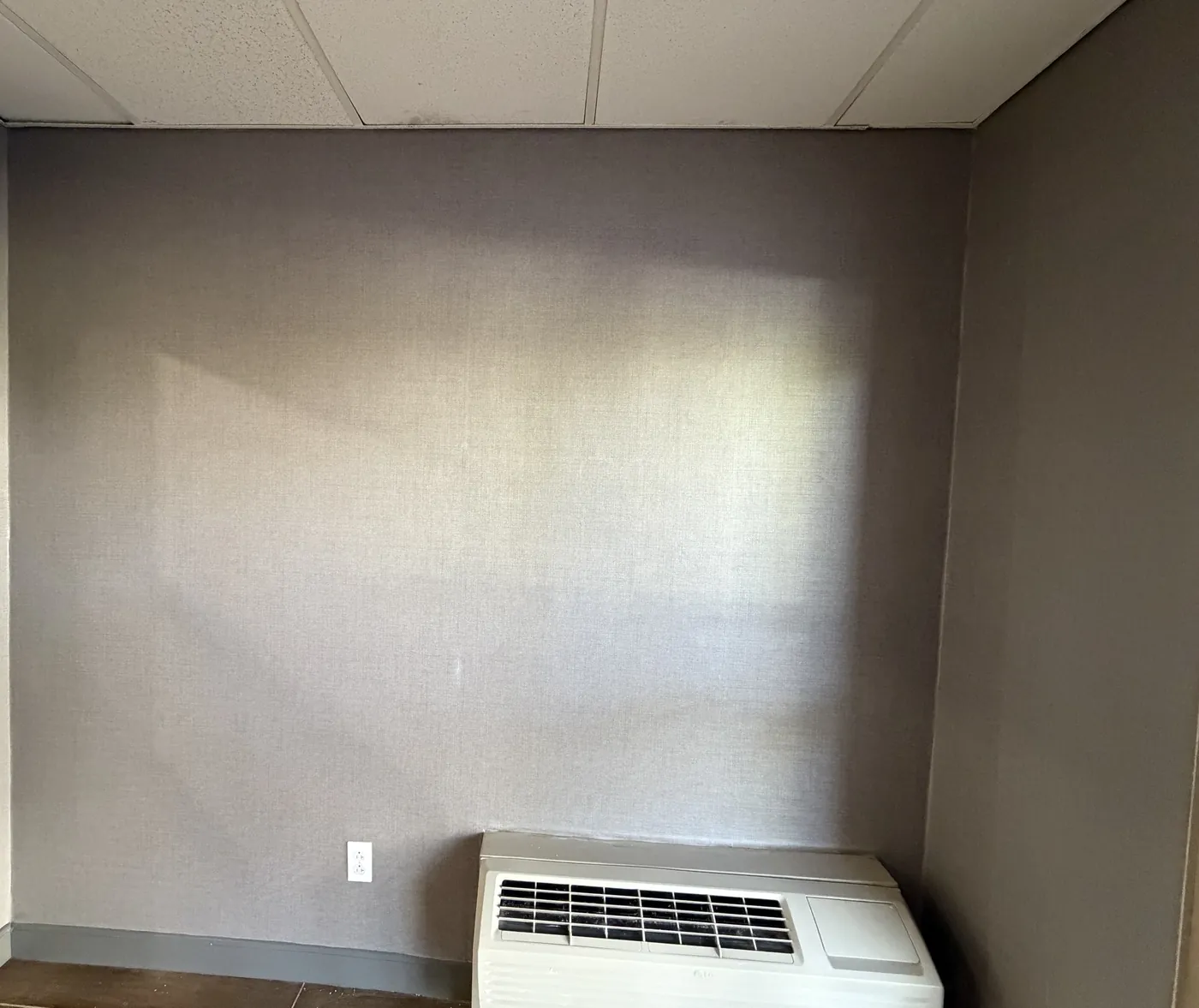
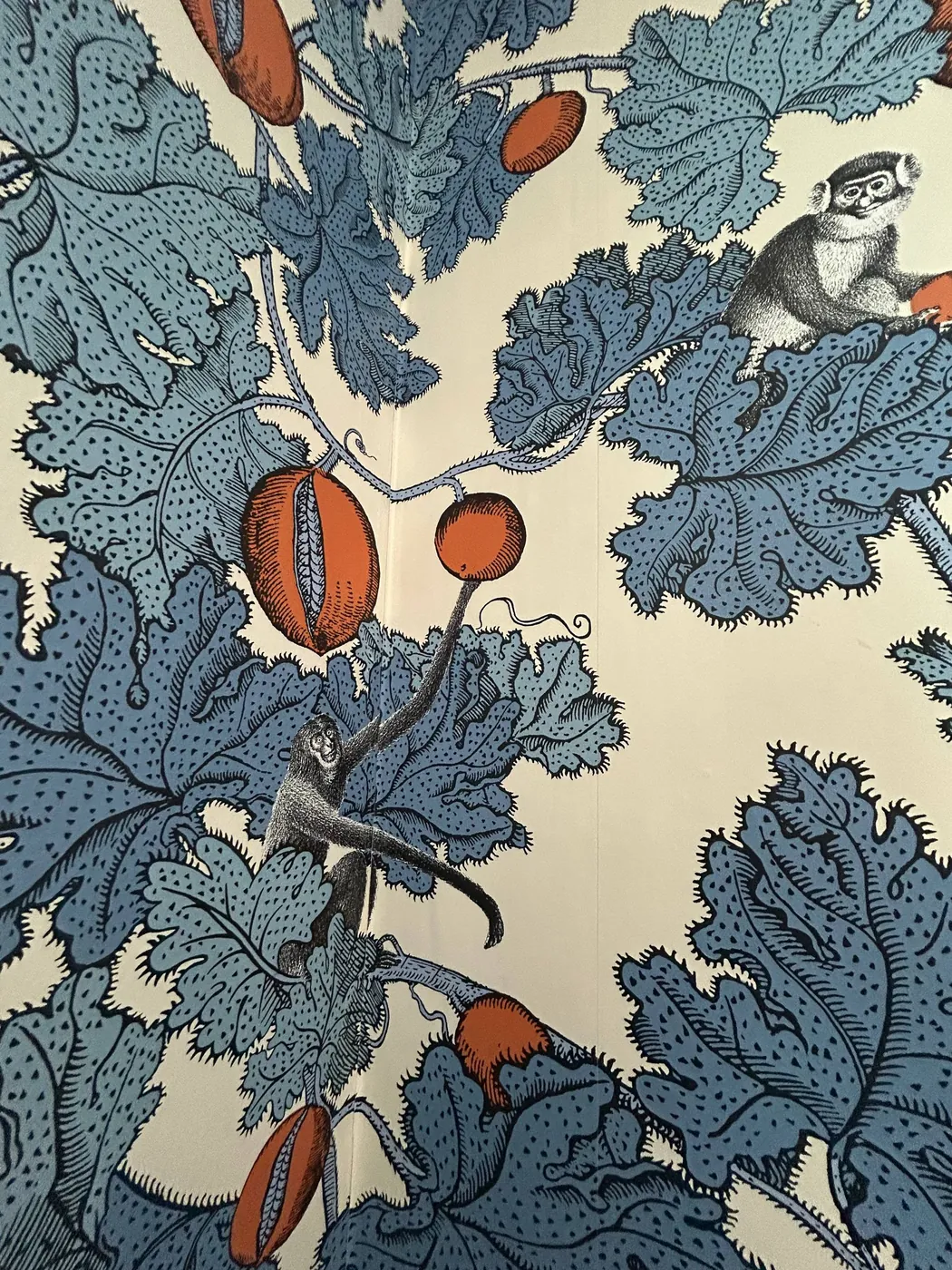
Selected projects from our portfolio. See all projects.
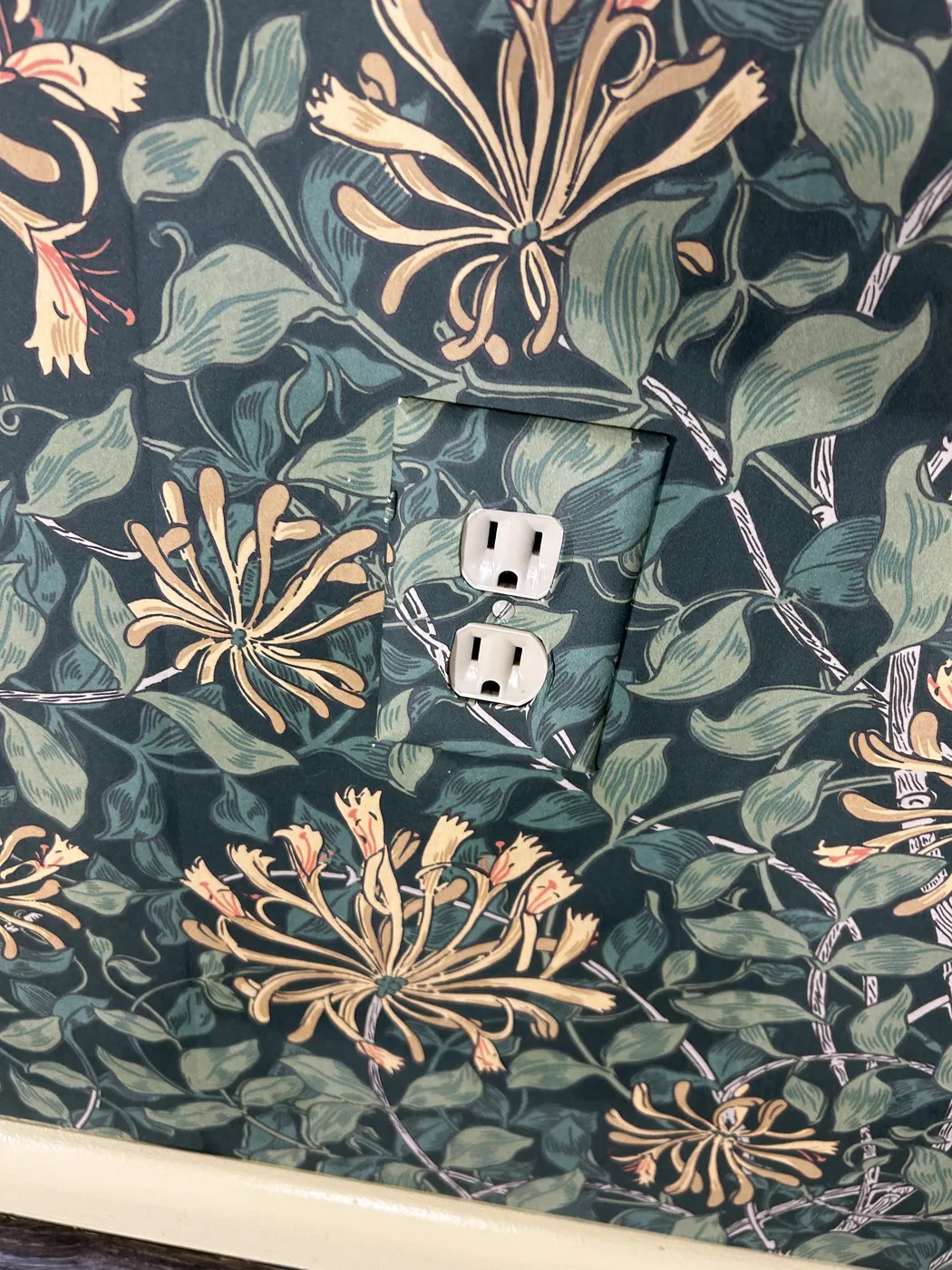
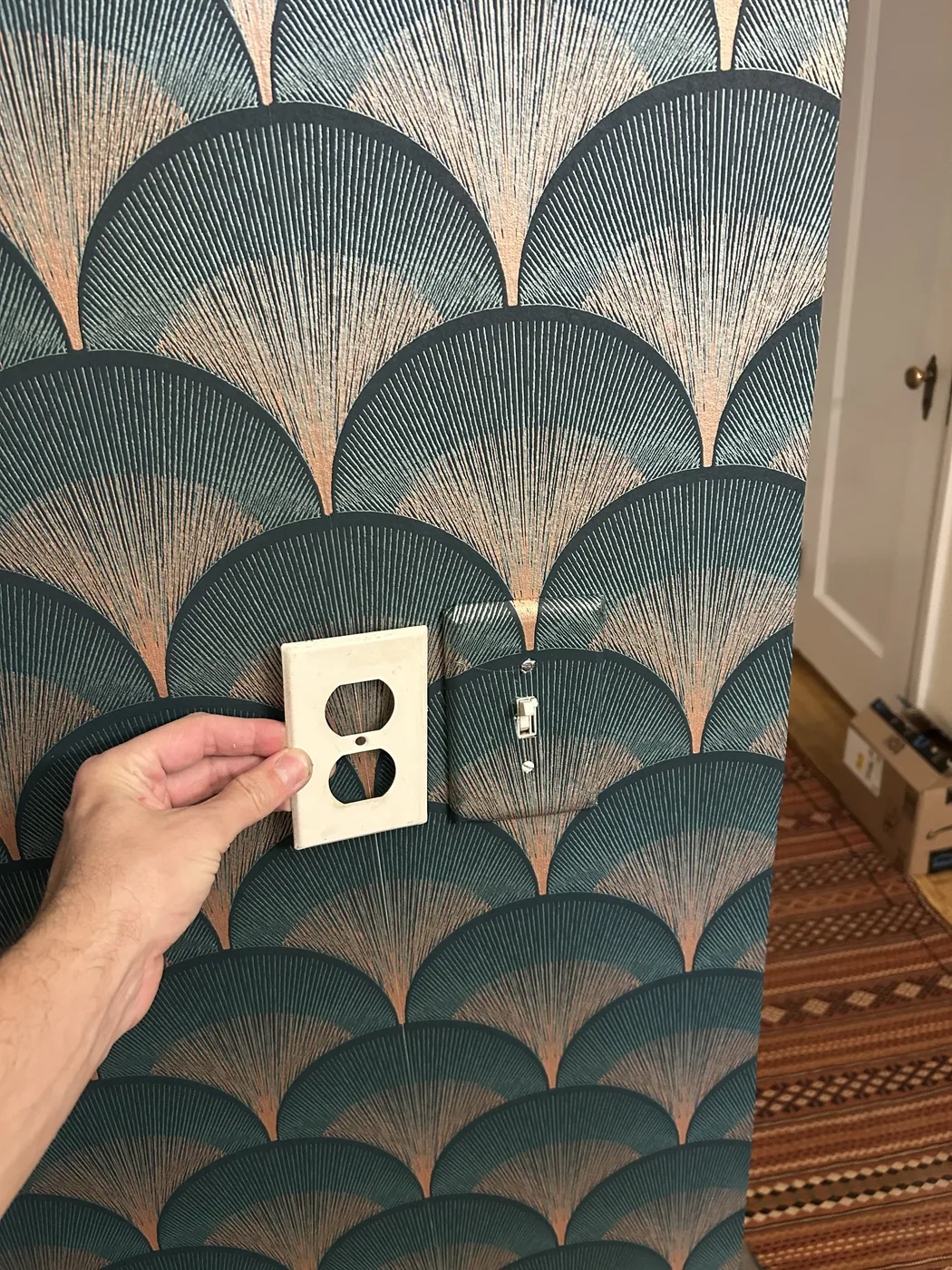
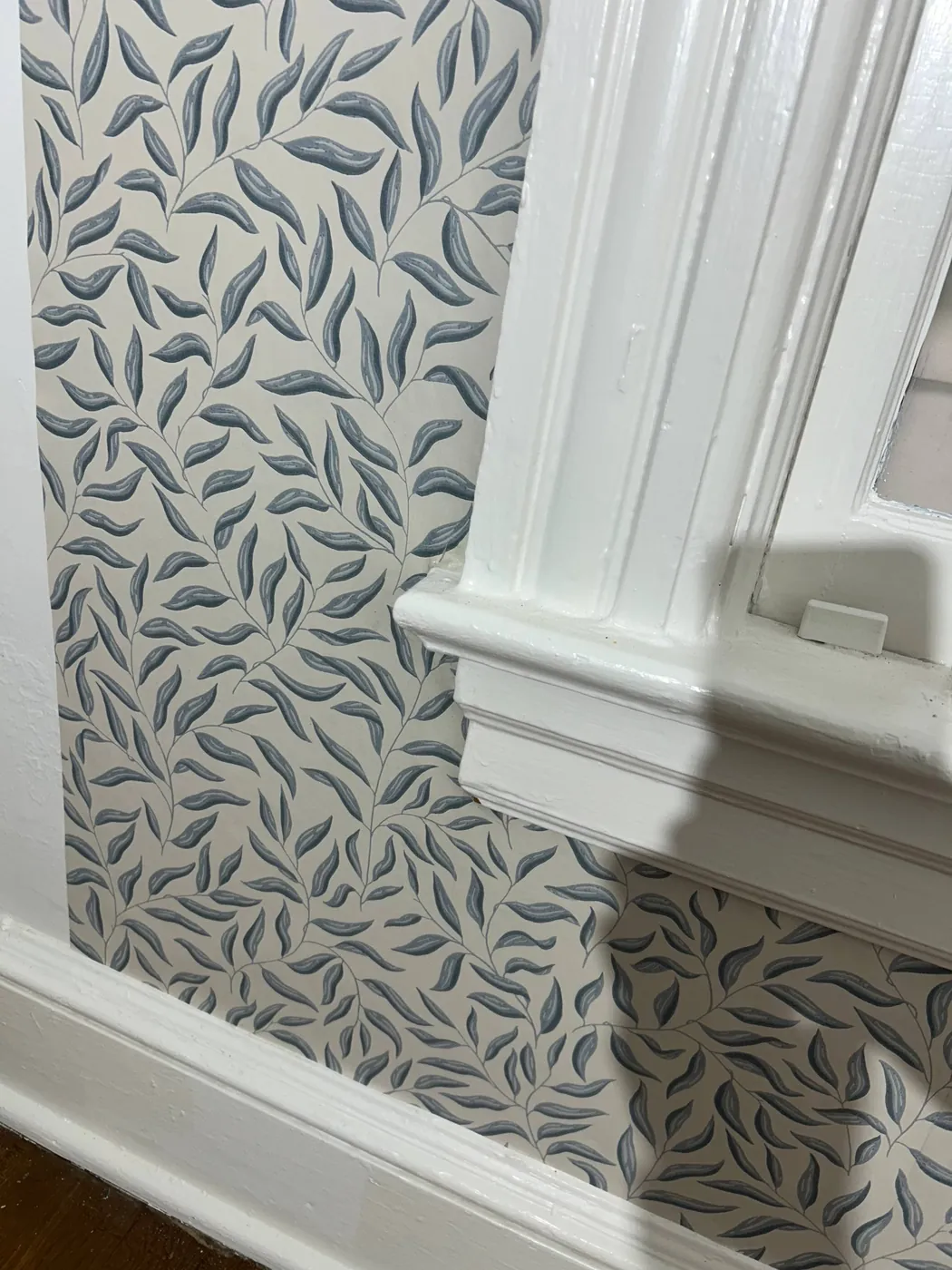
New York City, Long Island, Westchester County and northern New Jersey: Manhattan, Brooklyn, Long Island, The Hamptons, Westchester, Hoboken, Montclair.
On patterned wallpaper, yes. A double cut patch with an exact pattern match and clean edges is very hard to find from normal viewing distance. On plain papers and grasscloth, a full strip replacement usually looks better than a patch.
First check whether the drywall is dented: shine a flashlight across the wall. If only the paper is damaged, patch it. If the wall is dented, the paper has to come off over the dent, the drywall gets filled or a piece replaced, sanded and primed, and then a new piece of wallpaper goes on.
Ask building management, check closets and storage, or take a piece from a hidden spot such as inside a closet or behind a large piece of furniture. If the pattern is still made, order a roll, keeping in mind a new batch may differ slightly in shade.
A small hole or cut on a busy pattern is a reasonable DIY job if you have matching paper and a sharp knife. For dented drywall, plain or grasscloth wallpaper, or expensive paper you cannot replace, it is safer to hire a pro: ruining the only spare piece is the worst outcome.
We usually quote a single patch from about $300, depending on the wallpaper and access. If the drywall behind it needs repair, add roughly $150 to $200. Replacing a full strip is quoted from photos.
The patch itself takes an hour or two. If the drywall needs filling, the compound has to dry before the paper goes on, so it can mean a second visit.
Ready to start your project? Call, text or WhatsApp photos for a fast, free estimate. We reply within 30 minutes.
 ProKir