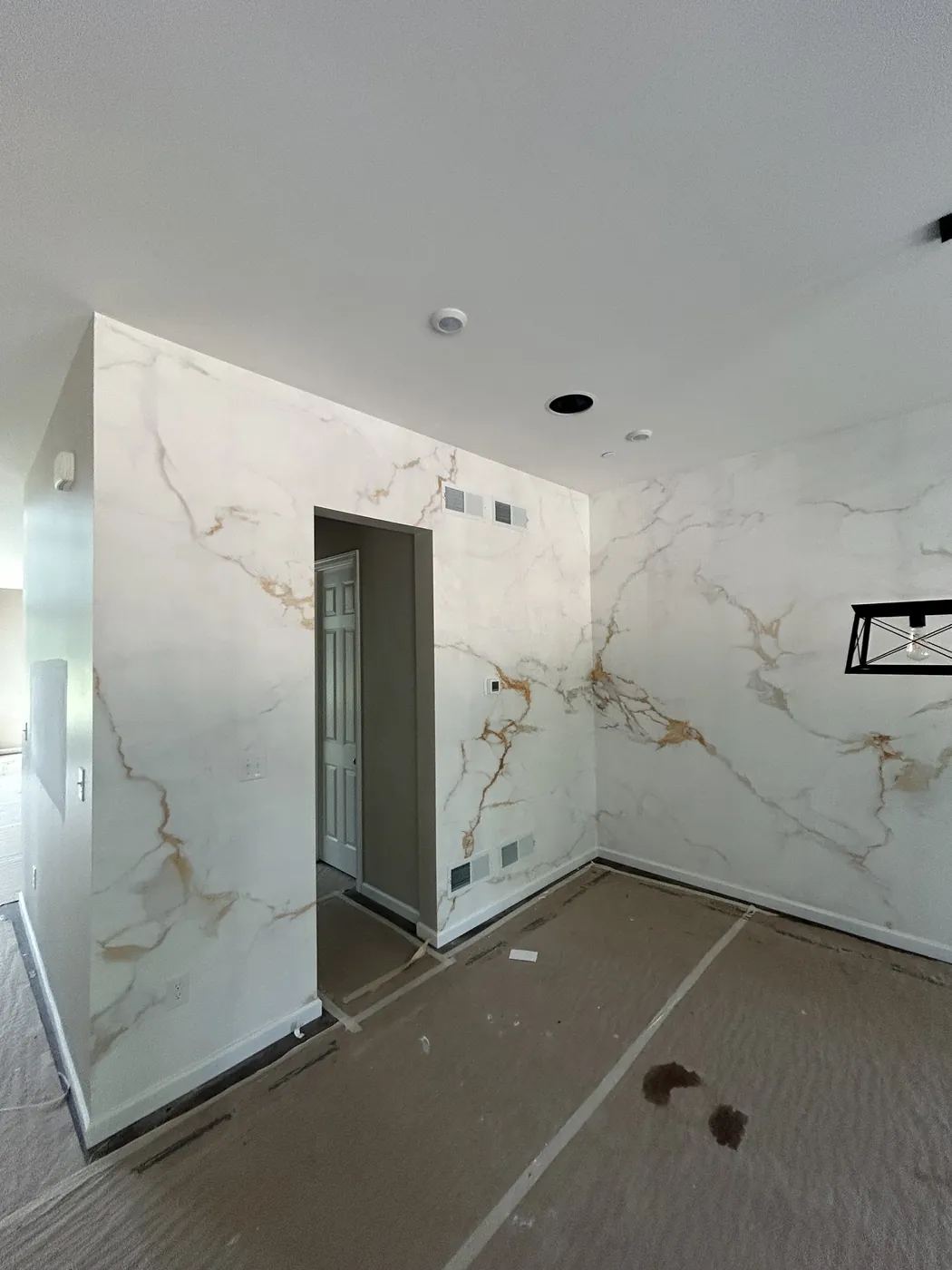
The paper is off, but the wall still feels slick. That leftover paste is the reason paint cracks and new wallpaper fails, and it takes less than an hour per room to wash off.
We reply within 30 minutes: call, text or WhatsApp
Wash it off with hot water and a sponge, changing the water often, until the wall no longer feels slippery. For old or stubborn paste add a little dish soap or use a wallpaper remover with enzymes, let it sit a few minutes and wipe. Rinse with clean water, let the wall dry overnight and prime before painting. Leftover paste under paint causes cracking, crazing and peeling.
Written by our installers from jobs we do every week. Prefer not to do it yourself? Send photos and we quote the job, usually within hours.
Run a damp hand over the wall. Clean wall feels like drywall or plaster; paste feels slippery or soapy.
Look along the wall with a light from the side. Glossy streaks are dried paste.
Some pastes dry to a crust that flakes under a fingernail.
Dried paste often shows the swirl of the original paste brush or roller.
If a test patch of paint cracks into a fine web as it dries, there is paste under it.
Paint and new wallpaper both need a clean surface. Paste reactivates under water-based paint and lets go.
| Option | Good for | Notes |
|---|---|---|
| Hot water + sponge | Most modern pastes | Change the water often; dirty water just spreads paste around |
| Hot water + a little dish soap | Older or heavier paste | Rinse afterwards with clean water |
| Enzyme wallpaper remover | Old starch or wheat paste | Let it sit 5 to 10 minutes, then wipe |
| Vinegar solution | Light residue | Works, but not better than hot water and time |
| Scraper or sanding | Not recommended | Gouges the wall and spreads dust; wash instead |
See also how to remove wallpaper (all types), removing painted-over wallpaper, removing wallpaper from drywall, removing wallpaper glue, our wallpaper removal service and the pricing guide. Painting afterwards? See which primer to use.
Selected projects from our portfolio. See all projects.
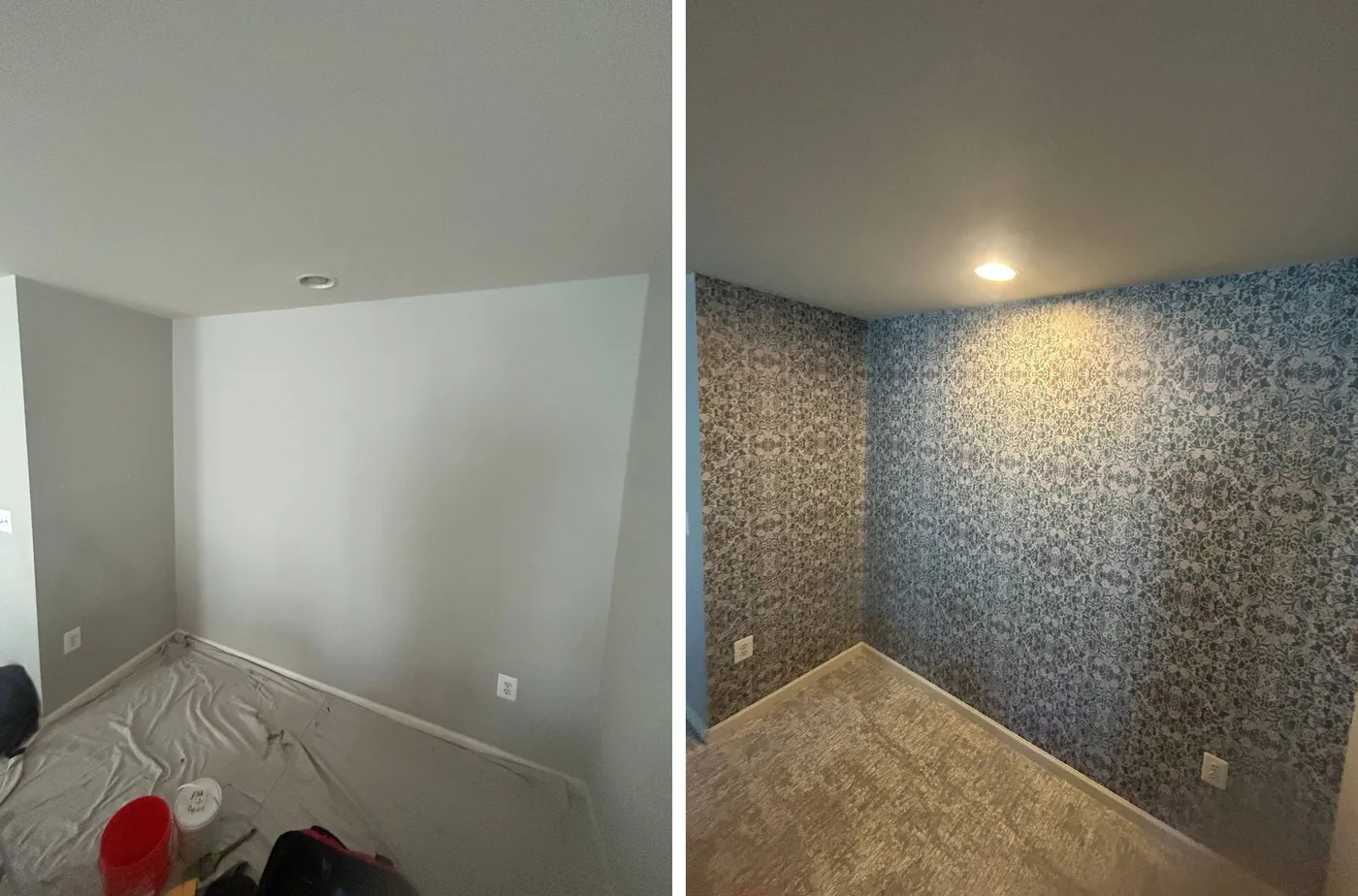
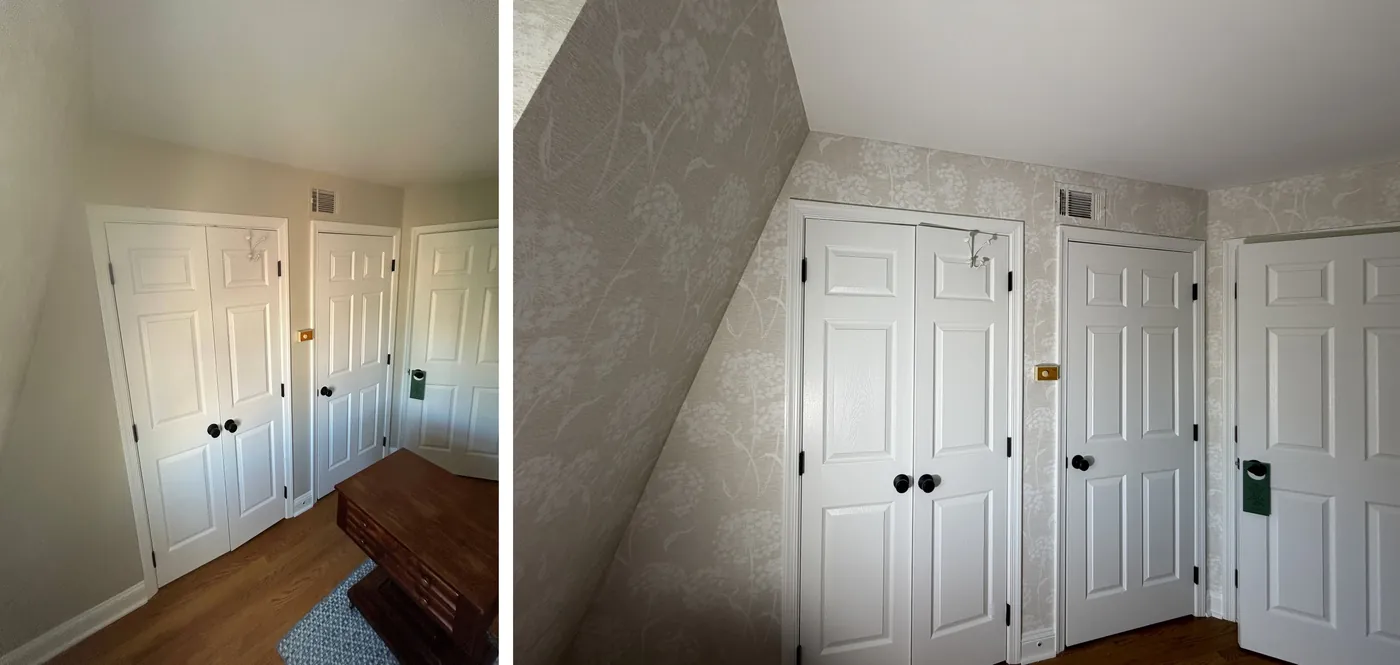
New York City, Long Island, Westchester County and northern New Jersey: Manhattan, Brooklyn, Long Island, The Hamptons, Westchester, Hoboken, Montclair.
Hot water and a sponge, changed often, until the wall no longer feels slippery. Add dish soap or an enzyme remover for old paste.
Yes. Paste left on the wall reactivates under water-based paint and causes cracking and peeling. If you can't get every trace off, seal the wall with an oil-based or shellac primer first.
Not reliably. New paste doesn't bond well to old paste, and seams can open. Wash it off and use a wallcovering primer.
It helps a little, but hot water and enough soaking time do most of the work.
Wet your hand and run it over the wall. If it feels slippery anywhere, there is still paste.
Not if you use a wrung-out sponge and work in sections. Soaking drywall for long periods softens the face.
Ready to start your project? Call, text or WhatsApp photos for a fast, free estimate. We reply within 30 minutes.
 ProKir